

Calbit C
Last updated:

Calcium complexed with lignin sulphonate (LS).

CALBIT C is a nutritional supplement based on calcium complexed with LS. CALBIT C is indicated for the prevention and treatment of:
Treatments with CALBIT C lead to increased fruit firmness and, consequently, longer shelf life.
CALBIT C is ideal for applying calcium fertigation due to the presence of LS complex that protects the same from insolubilisation reactions (LS-Calcium complex is stable at pH between 3 and 6.5).
If applied to the leaves, CALBIT C is not phytotoxic and does not cause russeting on the fruit susceptible to such physiological disorders (e.g.pome fruits fruits).
Type of Crop | Period of Application | Dose |
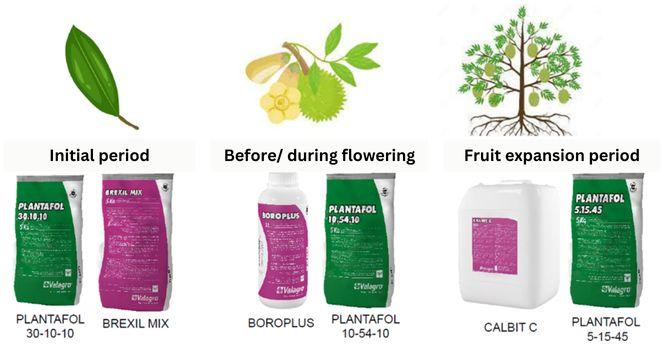
Durian | Application every 7 - 10 days from flowering to fruit harvest | 2- 3 L/ha |
Leafy and Fruity Vegetables | 2- 3 L/ha | |
Ornamentals | 2 - 3 applications | 250 - 350 mL/hL |
ALL | During crop cycle (Fertigation) | 10 - 30 L/ha per application |
Valagro Technology Platform GeaPower

Process of plant absorption of LSA trace elements from aqueous solution
Note:
LSA trace elements - penetrate into cells and are separated and used by plants
Chelates are insoluble in water and cannot be absorbed by plant leaf cells. They can only be absorbed by plants when the leaf pores are open.


Micronutrients

Micronutrients