

Boroplus
Last updated:

Boron combined with ethanolamine.

This boron complex contains an organic molecule and is a liquid formulation, allowing a perfectly uniform distribution of the product, both for foliar application and fertigation. With this formulation, the risk of phytotoxicity associated with the use of boron is significantly reduced. The use of BOROPLUS allows:
Type of Crop | Period of Application | Dose |
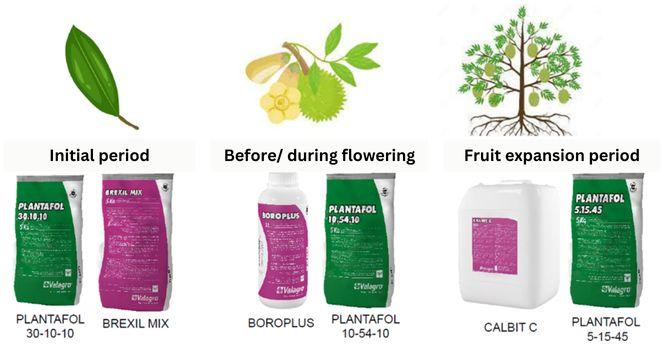
Durian | 2 applications at flowering end fruit setting | 1 - 2 L/ha |
Leafy and Fruity Vegetables | Application at flowering and fruit setting | |
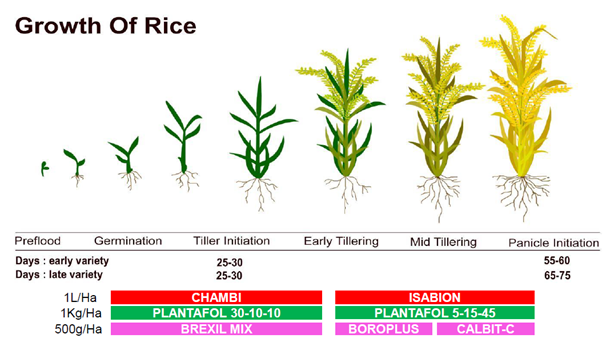
Paddy | During crop cycle | |
Ornamentals | 2 - 3 applications | 100 - 200 mL/hL |
Durian (Fertigation) | During crop cycle | 4 - 6 L/ha |
Fertigation (Leafy and Fruity Vegetables, Ornamentals) | 3 - 5 L/ha |
Valagro Technology Platform GeaPower

Process of plant absorption of LSA trace elements from aqueous solution
Note:
LSA trace elements - penetrate into cells and are separated and used by plants
Chelates are insoluble in water and cannot be absorbed by plant leaf cells. They can only be absorbed by plants when the leaf pores are open.

Micronutrients

Micronutrients